


 by
by The exercises below are designed to help players in each position improve their effectiveness.
LEADS
Take out three jacks and some markers.
First end: bowl full length to no jack, and then take off two metres with each of the next three bowls. Do this in each direction (8 bowls).
AIM: four equally spaced bowls on the centre line, finding green and establishing control of weight.
Roll a jack then a bowl using the same weight as you used for the jack (you should use the same delivery for the jack as you do for the bowl).
Do this three times, long medium short. Compare the finishing positions of the bowls and jacks and so work out how to alter your delivery between bowl and jack.
Draw with your other bowl to the longest jack Do this in each direction (8 bowls).AIM – jack roll practice The jack roll may also help you get the correct weight for your first bowl.
Place a jack at one end and a marker about 2 metres shorter and a jack at the other end. Place the mat and bowl twice at the long jack and then twice at the shorter jack staying on the same side of the green.
Change ends, place the mat in front of the shorter jack and bowl twice at the single jack on the same side.
Then move the mat back to the longer jack and bowl twice, staying on the same side of the rink. Repeat (16 bowls). Vary the placement of the mat each time.
Change to the other side of the rink and repeat (16 bowls) Continue but keep swapping sides. For example two forehands to long jack , two backhands to short jack two backhands with mat up two forehands with mat back (32 bowls)
AIM: two bowl draw practice, the second bowl should beat the first bowl!
TWOS
Take out two jacks and four markers or rebound jacks and markers.
First End: bowl full length to no jack, and then take off two metres with each of the next three bowls. Do this in each direction (8 bowls).
AIM: four equally spaced bowls on the centre line, finding green and establishing control of weight.
Place a jack near the six-foot spot and a marker at one end at least three metres apart and one jack at the other end. Place the mat and bowl twice at the long jack and then twice at the short marker. Change ends, place the mat in front of the shorter marker and bowl twice at the single jack. Then move the mat back to the longer jack and bowl twice. Repeat three times, varying the mat position .(32 bowls). Initially bowl both bowls on the same side, later bowl one bowl on each hand.
AIM: two bowl draw practice to develop control of green. The second bowl should be better than the first.
Use four rebound bowls (or flat plastic markers with a spare bowl sitting on top). At each end place the markers or bowls about 1 metre and 2 metres short of the jack so that they are comfortably inside (20 to 30 cm) the line which you would expect your bowl to take when drawing on that hand. Draw to a target area behind the jack within 1 metre. Bowl all four on the same hand. Do this three times each way (24 bowls).
AIM: getting around a bowl without adding weight. When most bowlers are faced with this position, 60% of bowls are narrow and 30% heavy even when the short bowl is well clear of the needed path.
At each end of the rink place one marker or rebound bowl 30cm from the jack in a jack high position, and another marker 1 metre back and 50 cm narrow. With your first bowl on each end try to draw within 30cm. If you are not satisfied with your first bowl try again. With subsequent bowls try to achieve a yard on bowl through the gap or turning out your first bowl by slightly increasing the weight and reducing the green. This is best done by making the backmarker your jack (depending on the width of your bowls): repeat three times (24 bowls).
AIM: to play a yard on, turning out an opposition bowl while keeping your bowl in the head Place jacks or markers off centre and draw to them. (8 bowls).
THREES AND SKIPS
Take out two jacks and four markers or rebound jacks and markers and some half tennis balls.
First End: bowl full length to no jack, and then take off two metres with each of the next three bowls. Do this in each direction (8 bowls).
AIM: four equally spaced bowls on the centre line, finding green and establishing control of weight.
At one end place a jack near the “T” and a marker three metres away and one jack at the other end. Place the mat and bowl twice at the longer jack and then twice at the shorter marker WITHOUT CROSSING THE CENTRE LINE. Change ends, place the mat in front of the marker and bowl twice at the single jack. Then move the mat back to the longer jack and bowl twice. Repeat three times.(32 bowls). Initially bowl both bowls on the same side, later bowl one bowl on each hand.
AIM: two bowl draw practice, developing control of green and learning not to cross the head when holding.
Using four rebound bowls and two rebound jacks (or four bowls sitting on markers and two jacks), coloured markers to show the target area. At each end place markers or bowls about 1 metre and 2 metres short of the jack so that they are comfortably inside (20 to 30 cm) the line which you would expect your bowl to take when drawing on that hand. Draw to a target area behind the jack within ½ metre. Bowl all four on the same hand, trying to go around the rebound bowls and finish inside the target area. Do this three times each way (24 bowls).
AIM: get around a bowl without adding weight. When faced with this position most bowlers play 60% of bowls narrow and 30% heavy even when the short bowl is well clear of the needed path
At each end place a rebound bowl or half tennis ball 30cm from the jack (or rebound jack) in a jack high position. Mark a target area 70 cm square with a half tennis ball in the middle. With your first bowl on each end try to draw within 30cm. If you are not satisfied with your first bowl try again. With subsequent bowls try to draw to the target square by slightly increasing the weight and reducing the green (making the half tennis ball in the middle of the square your jack). With practice try to increase the speed of the shot by one metre with each bowl on each end, but none of these bowls should finish in the ditch. Repeat three or more times (24 bowls).
AIM: to develop skill in yard on bowls and running through the head without losing your bowl Place one jack or rebound jack on the centre line and a half tennis ball on each side of the rink, one close to the ditch. Drive twice at the single jack. Then draw to each marker outside in. Repeat one or more times if you have the energy, varying the mat position (16 bowls).
AIM: to develop driving skills and to be able to immediately return to the draw.
WHAT MAKES A GOOD…….
What makes a good lead?
Self-Control: The requirement of leads is to deliver their bowls as close to the jack as possible. Unless specifically instructed by their skip; they should strictly avoid niggling at close opposition bowls, keep their mind clear and focus on their objective.
What makes a good two?
Must be able to help build upon the foundation the lead has created, provided the leads bowls are on the jack. If they are not, then their job is to retrieve the situation and get their bowls closer to the jack than the opposition.
What makes a good three?
Must be an all-around good bowler, since they will face every conceivable situation when they come to the mat. In particular, they may be called upon to play a wide variety of running shots.
What makes a good skip?
Fairness and tact. A good skip will display all these, and any other favourable attributes that the circumstances demand. Like the three, the skip must be a good all-round bowler, be able to read the head, and give precise instructions to his or her fellow bowlers.
WHO DOES WHAT? – PLAYERS’ DUTIES
THE LEAD
The lead of the team to play first in an end should place the mat, deliver the jack, and make sure that it is centred before delivering the first bowl of the end.
Any player may, additionally, undertake such duties as may be assigned to him by the skip.
It is also worth emphasising that the head must not be disturbed by any player when the Threes or Skips are deciding the shots until the shots have been finally agreed.
THE TWO
Helps build up the head, and updates the scoreboard where necessary (usually upon completion of alternate ends).
THE THREE
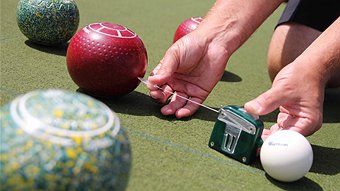
The three can measure any and all disputed shots. The other players should stand well back from the head while this is taking place in order to give them the necessary space.
The three can tell the skip the number of shots scored for or against their team as each end is completed.
THE SKIP
Is responsible for:
the score card;
entering the names of all players of both teams on the score card;
recording, on the score card, all shots scored for and against the team as each end is completed;
comparing the score card with that of the opposing skip as each end is completed and, at the end of the game, recording on the score card the time that the game finished and then signing it.
Skips can at any time delegate their own powers and any of their duties (except those relating to the keeping of the score card) to any other members of the team as long as they tell the opposing skip immediately.

Any more exercise charts I can download with all measurements, so that can set up. The one shown has none showing.